
Anxiety is one of the most common mental health concerns affecting teens and adults today.
For some people, it shows up as constant overthinking. For others, it feels more physical — tightness in the chest, trouble sleeping, racing thoughts, irritability, restlessness, or a constant sense that something is wrong. In a busy community like Hazlet, anxiety can easily hide behind work stress, parenting pressure, academic demands, relationship strain, or the feeling of always needing to be “on.”
The important thing to know is that anxiety is treatable. And treatment does not look the same for everyone.
What Does Anxiety Actually Look Like?
A lot of people assume anxiety always looks obvious, but that is not always true.
Some people with anxiety still go to work, take care of their families, keep up with school, and appear functional from the outside. Internally, however, they may be dealing with a constant stream of worry and physical tension that never fully turns off.
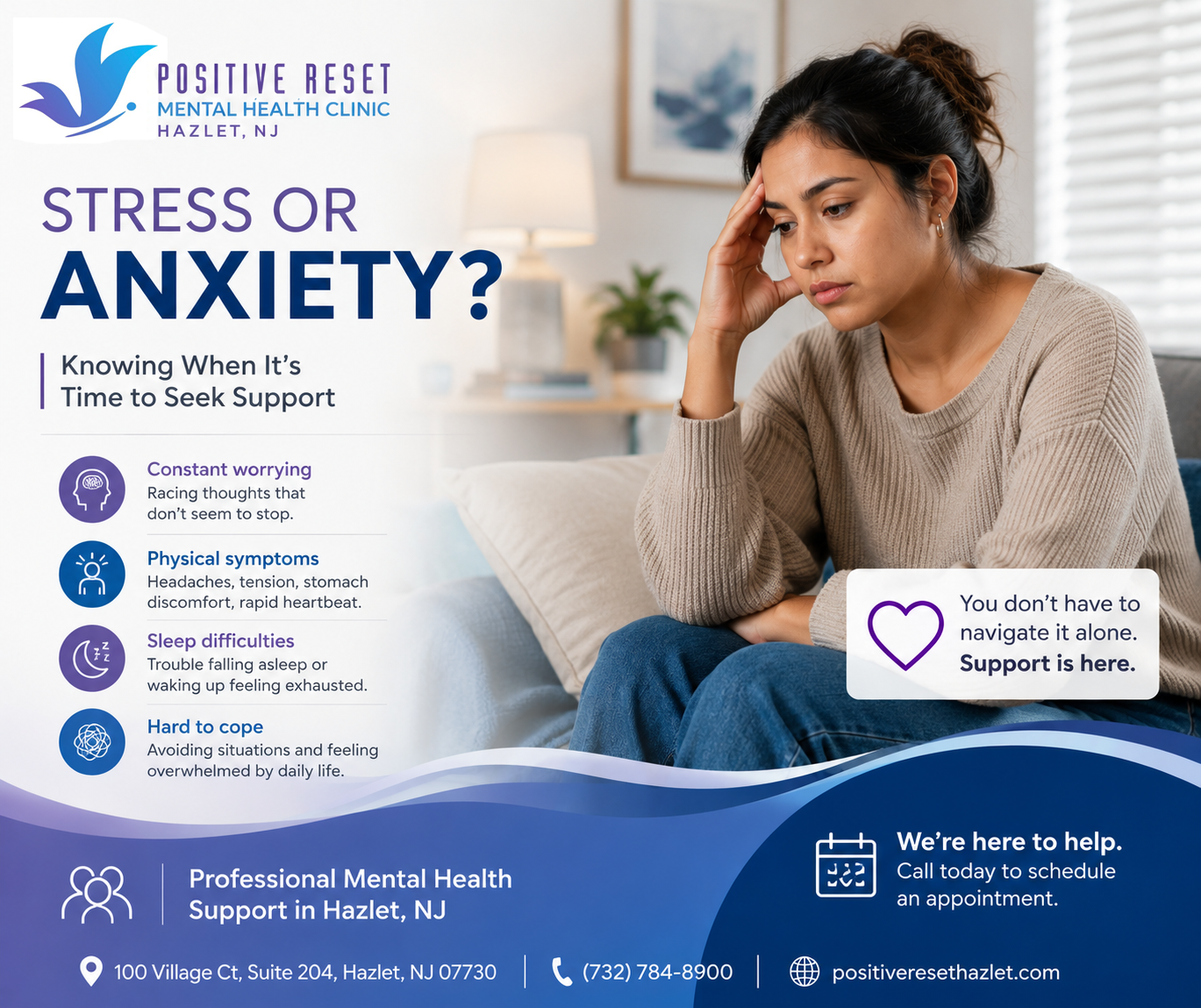
Common anxiety symptoms include:
-
excessive worrying
-
racing thoughts
-
irritability
-
trouble concentrating
-
restlessness
-
sleep disruption
-
panic symptoms
-
muscle tension
-
avoidance of stressful situations
-
feeling overwhelmed by everyday tasks
In teens, anxiety may also look like:
-
school refusal
-
increased irritability
-
perfectionism
-
social withdrawal
-
stomachaches or headaches
-
difficulty sleeping before school or activities
When Anxiety Starts Interfering With Daily Life
Stress is part of life. Anxiety becomes more concerning when it starts interfering with how a person functions.
That may include:
-
trouble focusing at work or school
-
difficulty making decisions
-
avoiding calls, appointments, social situations, or responsibilities
-
trouble sleeping consistently
-
feeling emotionally exhausted from constant worry
-
needing unhealthy coping habits such as isolation, alcohol, or endless scrolling
When anxiety reaches this point, it is often more than “just stress.”
What Causes Anxiety?
Anxiety can develop for many reasons, and often there is more than one factor involved.
Common contributors include:
-
chronic stress
-
family history
-
trauma
-
burnout
-
major life transitions
-
relationship conflict
-
academic pressure
-
health concerns
-
financial stress
-
untreated ADHD
-
ongoing sleep disruption
Sometimes people can identify exactly when their anxiety worsened. Other times it builds slowly and becomes their new normal.
What Are the Main Treatment Options for Anxiety?
There is no single treatment that fits everyone. The right plan depends on the severity of symptoms, how long they have been present, whether other conditions are involved, and how much daily functioning has been affected.
Individual Therapy for Anxiety
Therapy is often one of the most effective starting points for anxiety treatment.
Individual counseling can help people:
-
identify thought patterns that fuel anxiety
-
understand triggers
-
improve emotional regulation
-
reduce avoidance behaviors
-
learn practical coping strategies
-
build more stability into daily life
For many patients, therapy also provides something they have been missing for a long time: a structured space to slow down, think clearly, and work through what is driving their symptoms.
Cognitive behavioral therapy is one of the most common approaches used for anxiety, especially when worry, panic, perfectionism, or avoidance are part of the picture.
Medication Management for Anxiety
Medication management can be helpful when anxiety is more severe, persistent, or not improving enough with counseling alone.
This does not mean medication is the answer for everyone. But for some people, it can reduce the intensity of symptoms enough to make therapy, work, school, and daily functioning more manageable.
Medication management typically involves:
-
an evaluation of symptoms
-
discussion of treatment history
-
careful selection of medication when appropriate
-
follow-up appointments
-
monitoring side effects and progress
-
adjustments over time if needed
The goal is not simply to prescribe medication. The goal is to find the most appropriate treatment plan for the individual.
Therapy and Medication Together
In many cases, the strongest results come from combining therapy and medication management.
Therapy helps a person understand and change the patterns contributing to anxiety. Medication, when appropriate, may help lower the intensity of symptoms so those changes are easier to make.
This combined approach can be especially useful for people experiencing:
-
frequent panic symptoms
-
severe generalized anxiety
-
anxiety with depression
-
anxiety that has become chronic
-
major interference with work, school, or relationships
When Weekly Therapy May Not Be Enough
Some people need more support than an occasional session.
If anxiety has become severe, overwhelming, or tied to other mental health concerns, a higher level of care may be worth considering. Structured outpatient support, including Intensive Outpatient Programs, can help people who need more consistent treatment without inpatient hospitalization.
This can be helpful when someone is:
-
deteriorating quickly
-
unable to function normally
-
cycling between brief improvement and relapse
-
dealing with multiple conditions at once
Anxiety in Teens and Young Adults
Teen anxiety is often missed because it is mistaken for moodiness, laziness, or personality changes.
In reality, teens today are often navigating:
-
academic pressure
-
social comparison
-
digital overload
-
identity concerns
-
fear of failure
-
social anxiety
-
uncertainty about the future
When anxiety in teens goes untreated, it can affect school performance, friendships, confidence, sleep, and family dynamics.
Treatment for teens may include individual counseling, family involvement, practical coping tools, and, in some cases, medication management when clinically appropriate.
How Do You Know When to Seek Help?
It may be time to seek professional support if:
-
worry feels constant or hard to control
-
sleep is regularly affected
-
panic symptoms are happening
-
anxiety is causing avoidance
-
school or work performance is declining
-
relationships are suffering
-
physical symptoms keep appearing with no clear medical explanation
-
symptoms have lasted more than a few weeks
Many people wait too long because they think they should be able to handle it on their own. But anxiety often responds better when it is treated earlier rather than later.
Local Anxiety Treatment in Hazlet, NJ
At Positive Reset in Hazlet, treatment may include counseling, medication management, and structured outpatient support depending on each patient’s needs.
Whether anxiety is showing up as overthinking, panic, insomnia, irritability, or emotional exhaustion, getting a clear treatment plan can be an important first step.
📍100 Village Crt. Suite 204, Hazlet NJ 07730
Mon-Thu: 9 am to 8 pm
Fri-Sat: 9 am to 5 pm
📞 Call to schedule an appointment
(732) 784-8900

Related Resources
We Accept Medicaid, Medicare and Commercial Insurance Plans