
Stress is something we all experience. Busy schedules, work demands, family responsibilities, finances, and daily challenges can all leave us feeling overwhelmed at times.
But sometimes what seems like “normal stress” may actually be something more.
Understanding the difference between stress and anxiety can help you recognize when additional support may be helpful.
What Is Normal Stress?
Stress is typically connected to a specific situation or challenge.
Examples include:
- work deadlines
- family conflicts
- financial pressure
- health concerns
- major life changes
Stress often improves once the situation changes or resolves.
Common symptoms of stress may include:
- temporary irritability
- trouble concentrating
- feeling overwhelmed
- poor sleep during difficult periods
While stress can feel uncomfortable, it is often temporary.
What Anxiety Can Look Like
Anxiety tends to be more persistent and may continue even when there isn’t an obvious reason for worry.
People with anxiety may experience:
Constant worrying
Feeling unable to “turn off” racing thoughts or concerns.
Physical symptoms
Anxiety can affect the body, causing:
- muscle tension
- headaches
- stomach discomfort
- rapid heartbeat
- chest tightness
Sleep difficulties
Many people with anxiety struggle with:
- trouble falling asleep
- waking up frequently
- feeling mentally exhausted
Avoidance
Some individuals begin avoiding situations, responsibilities, or social interactions because anxiety feels overwhelming.
When Is It Time to Seek Support?
A good question to ask yourself is:
“Is this affecting my daily life?”
If symptoms are impacting:
- work
- relationships
- sleep
- focus
- emotional wellbeing
…it may be time to consider professional support.
You do not need to wait until things feel severe before reaching out.
Treatment Options for Anxiety
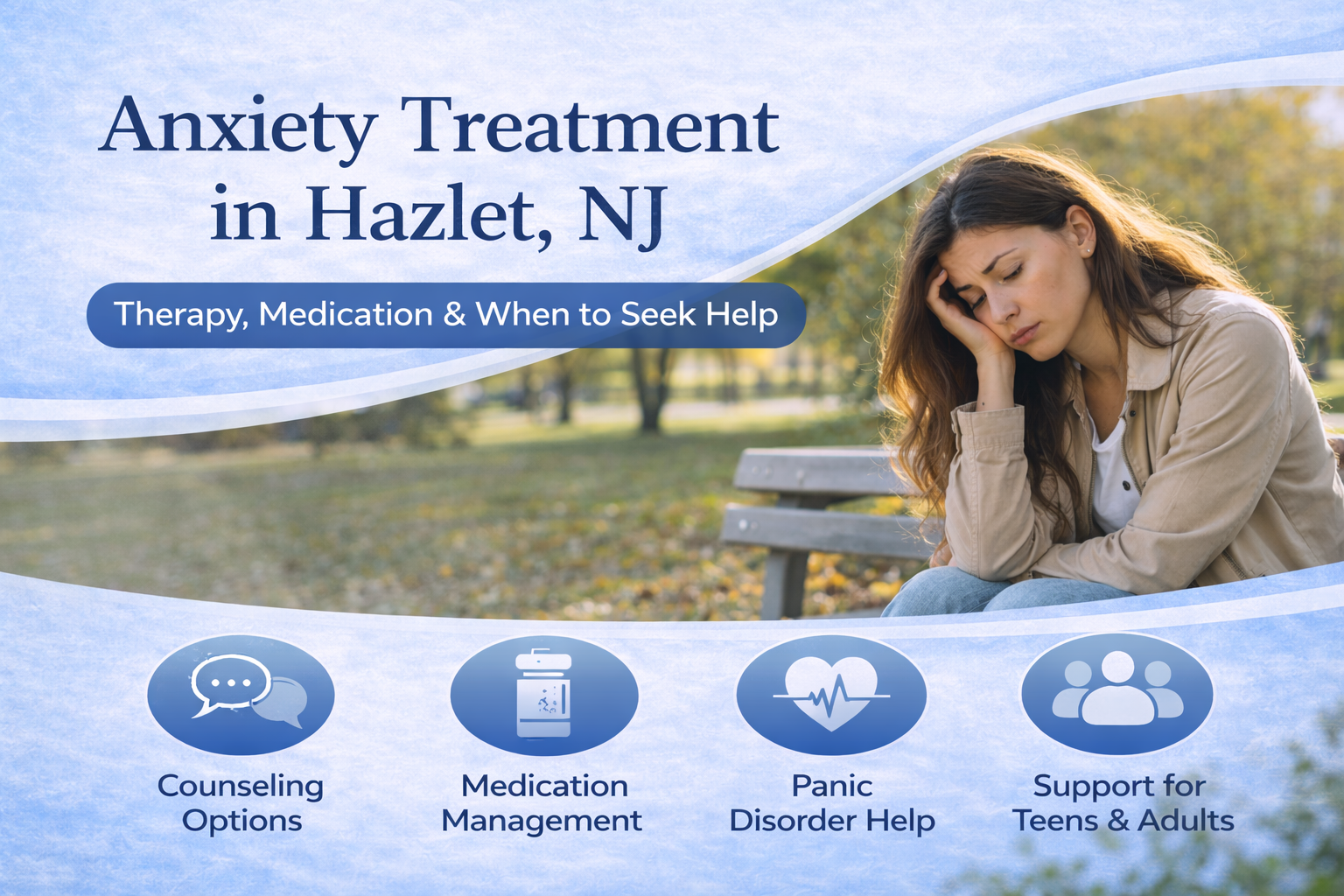
Anxiety is very treatable, and many people experience meaningful improvement with the right support.
Treatment may include:
Counseling and therapy
Therapy can help identify patterns, develop coping strategies, and reduce emotional overwhelm.
Cognitive Behavioral Therapy (CBT)
CBT is commonly used to help people better understand and manage anxious thoughts.
Medication management
For some individuals, medication may be recommended as part of a personalized treatment plan.
Healthy coping strategies
Sleep, routines, mindfulness, exercise, and stress management can all support emotional wellbeing.
You Don’t Have to Navigate It Alone
Feeling stressed from time to time is part of life — but if worry, overwhelm, or physical symptoms are becoming difficult to manage, help is available.
At Positive Reset Mental Health Clinic in Hazlet, we support teens, adults, and families facing anxiety, stress, depression, ADHD, and other mental health concerns.
Taking the first step can feel difficult, but support is closer than you may think.
📍 100 Village Ct, Suite 204, Hazlet, NJ 07730
📞 (732) 784-8900

Related Resources
We Accept Medicaid, Medicare and Commercial Insurance Plans